Snack vs Drink Machines in the USA — Which Makes More Money?
Snack vs Drink Machines in the USA — Which Makes More Money? Side-by-side margins, velocity, and the verdict for American operators.
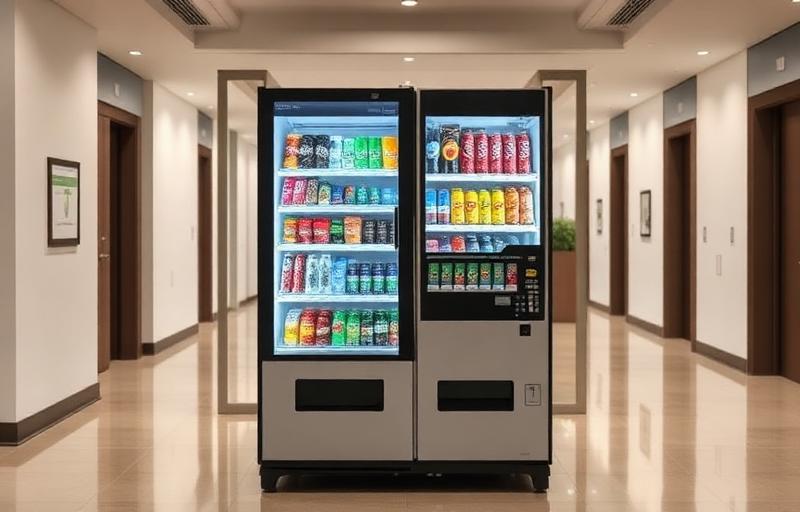
The snack vs drink question is the oldest debate in USA vending, and the honest answer is: it depends on the placement. Both can be highly profitable; both can be money-losers. Understanding the per-machine economics of each helps operators make smarter purchase and placement decisions.
Drink machines in the USA in 2026 carry higher gross margin per vend (55% to 70%) than snack machines (45% to 60%) on a typical product mix. A 20 oz Coca-Cola wholesaling at $1.10 and vending at $2.50 is a 56% margin transaction. A bag of Famous Amos cookies wholesaling at $0.50 and vending at $1.50 is a 67% margin transaction — but only if the snack actually sells.
Velocity is where drinks pull ahead in most American placements. A well-placed drink machine in a USA office or fitness center turns 4 to 8 times the velocity of a snack machine in the same location. Cold beverage is a daily, multi-times-per-day purchase for most American workers; snacks are a 1 to 2 times per week purchase for the same consumer.
Across the USA, demand concentrates in a handful of high-growth metros. Operators report the strongest unit economics in Texas, Florida, California, Georgia, Arizona, North Carolina, with standout suburban pockets like Plano, TX, Frisco, TX, The Woodlands, TX, Doral, FL, Coral Gables, FL, Alpharetta, GA consistently outperforming national averages. Climate is the biggest single driver of the snack vs drink ratio across the USA. Sun Belt placements (Texas, Florida, Arizona, Nevada) skew 65% to 75% drink-dominant year-round. Northern Midwest and Northeast placements skew closer to 55%/45% and shift toward snack-heavy during winter months.
Upfront cost is where snack machines win. A refurbished American snack machine in good condition runs $1,200 to $1,800 — meaningfully cheaper than a comparable refurbished drink machine ($1,800 to $2,800 due to the refrigeration unit). New, the gap widens: $4,000 to $5,500 for snack vs $5,500 to $8,000 for drink.
Operating cost is where drinks bite back. Refrigerated machines consume electricity (the host usually covers this but it can become a contract issue at large placements), require refrigerant maintenance, and have shorter useful equipment life than snack machines (8 to 12 years for drink machines vs 12 to 18 years for snack machines under typical USA conditions).
Combo machines (snack + drink in a single unit) are the right answer for the majority of small-to-mid USA placements. They cost $2,500 to $4,000 refurbished, fit in a single floor footprint that hosts can easily approve, and deliver 80% to 90% of the revenue of a snack+drink pair at lower upfront and operating cost. New operators in particular should default to combo machines for their first 5 to 10 placements.
Where pairs beat combos: high-volume USA placements where a single combo will sell out of either snack or drink between weekly service visits. Manufacturing plants of 300+ employees, large fitness centers, and busy distribution centers typically warrant a snack + drink pair to capture the full sales potential.
The verdict for USA operators in 2026: lead with combo machines for placements under 200 daily foot traffic. Upgrade to snack + drink pairs once a location proves it can sell out a combo between services. Invest in dedicated specialty machines (frozen, cold food, coffee) only at confirmed high-volume placements where the per-unit economics clearly support the premium hardware cost.
Once you've mapped your numbers, plug them into our free ROI Calculator at /roi-calculator to pressure-test the deal. For multi-machine routes, financing scenarios, and 5-year projections, the Premium ROI tools on the same page give you the lender-ready view.