How to Start a Vending Machine Business in the USA (2026 Guide)
Everything you need to start a vending machine business in America in 2026: real startup costs, LLC and licensing steps, machine buying, location acquisition, product mix, pricing, and month-by-month scaling.
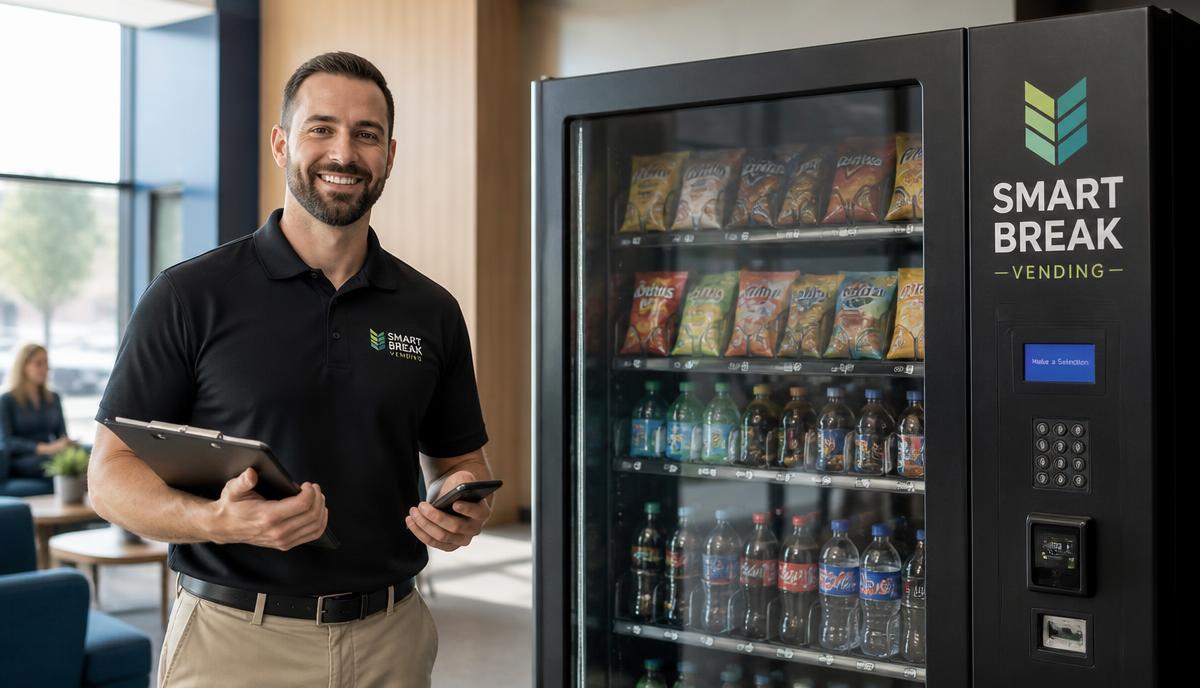
Vending is one of the few businesses in America you can start part-time, fund for less than the price of a used car, and grow into a six-figure route without ever quitting your job on day one. This guide walks through exactly how to start a vending machine business in the USA in 2026 — what it costs, what paperwork you actually need, which machines to buy, how to land locations, and what realistic profit looks like in year one.
What a vending machine business actually is
You own machines, you place them inside other people's businesses, and you keep the sales revenue (sometimes minus a small commission to the host). Your job is three things: get good locations, keep the right products in the machines, and service them reliably. Everything else — LLCs, financing, telemetry, software — supports those three jobs.
Step 1: Decide on your model
There are three common paths in the USA. Start from scratch — buy one or two machines and find your own locations; lowest cost, slowest ramp. Buy an existing route — pay 12 to 30x monthly net profit for machines that already have locations and provable revenue; fastest cash flow, needs capital. Free placement programs — place machines at qualified businesses that pay nothing, which is how most operators fill machines quickly. Browse live options on the Routes Hub and Locations Hub before you decide.
Step 2: Real startup costs in 2026
A realistic first-machine budget in the USA: refurbished combo snack/drink machine $2,000 to $3,000; card reader (Nayax or Cantaloupe) $250 to $400 plus $8 to $12/month; opening inventory $250 to $400; LLC filing $50 to $500 depending on state; EIN free; general liability insurance $300 to $700/year; hand truck, dolly straps and basic tools $300. Total for a properly equipped first machine: roughly $3,500 to $5,000. Two machines run $6,000 to $9,000. Financing can cover most of it — see the vending finance options and the application form.
Step 3: Legal setup
Form a single-member LLC in your home state, get a free EIN from the IRS online, open a business bank account, and register for state sales tax where required (most states treat vending sales as taxable). Bind a $1M general liability policy — nearly every commercial host will ask for a certificate of insurance before your machine goes through the door. Budget a weekend for all of it.
Step 4: Choose the right machines
For beginners, a refurbished combo machine (snacks and drinks in one cabinet) is the safest buy: one footprint, one service visit, two revenue streams. Popular reliable models in the USA are the AMS Sensit series, Crane National 157/168, and Dixie-Narco beverage units. Buy refurbished from a reputable regional dealer with a warranty, insist on a modern cashless reader, and never buy a machine before you have a location for it.
Step 5: Get locations (the part that decides your income)
Locations are the business. The highest-performing USA venues are warehouses and distribution centers, manufacturing plants, offices of 75+ staff, car dealerships, gyms, hotels, apartment complexes and 24-hour clinics. You do not need to cold call — walk-in cards, short emails, texts and LinkedIn outreach convert better in 2026. Full playbooks: get vending locations without cold calling and best vending machine locations in the USA.
Step 6: Build your product mix
Roughly 60% proven best-sellers, 30% category coverage (healthy, salty, sweet, water), 10% experimental. Energy drinks, cold brew, premium waters, protein bars and classic salty snacks carry most American routes. Price at 2.5x to 3x your cost — a $0.55 bag of chips sells at $1.50 to $1.75; a $1.35 energy drink sells at $3.00 to $3.50. Details in most profitable vending products in America.
Step 7: Know your numbers before you buy anything
A healthy USA machine grosses $250 to $600/month with 45% to 55% net margin after product cost, commission, card fees and fuel. Payback on a $3,500 machine placed well is typically 9 to 16 months. Run your own scenario in the Vending ROI Calculator — and read real operator ROI numbers for 2026 before you sign anything.
Step 8: Service routine
Weekly visits for busy locations, biweekly for slow ones. Restock to par, rotate stock by date, wipe the glass every visit, test the card reader, and log sales per machine. Telemetry (Nayax, Cantaloupe) pays for itself the moment you own more than three machines — you stop driving to machines that don't need you.
Step 9: Scale
Months 1 to 3: one machine, one location, learn the rhythm. Months 4 to 9: five machines clustered within a 15-mile radius, $800 to $1,500/month net. Months 10 to 18: fifteen machines, $2,500 to $4,500/month net, often financed. Months 19 to 36: thirty-plus machines, part-time helper, route software, $5,000 to $9,000/month net. Route density beats machine count — five machines in one business park out-earn ten scattered across a county.
Common mistakes that kill new vending businesses
Buying machines before securing locations. Accepting commission deals that don't underwrite. Stocking what you like instead of what sells. Spreading machines across too wide an area. Skipping insurance and losing the account. Treating it as a hobby instead of a business with books, taxes and contracts.
Is it worth it in 2026?
Yes — for operators who treat placement as a sales job and servicing as an operations job. Vending rewards discipline, not luck. Start with one well-placed machine, prove the numbers, then finance growth on the back of real data.
Ready to move? Browse vending routes for sale, find placement locations, run your ROI, or apply for equipment financing.