How to Start a Vending Route in the USA (Beginner to Advanced)
How to Start a Vending Route in the USA (Beginner to Advanced) — the complete 2026 playbook from first machine to 50-unit American route.
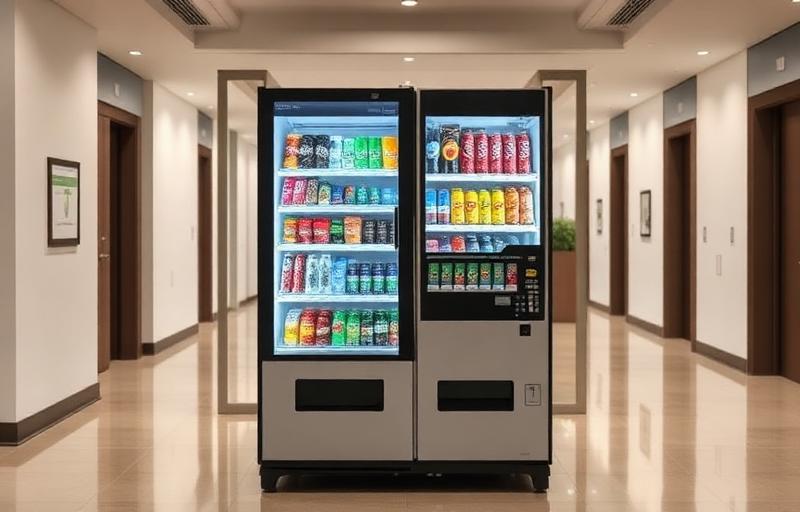
Starting a USA vending route in 2026 is one of the more accessible paths into legitimate small business ownership in America. The capital required is modest, the operational complexity is learnable, and the unit economics — done right — produce reliable monthly cash flow. The playbook below works for operators starting from zero.
Phase 1 (Month 1 to 2): foundation. Form a single-member LLC in your home state ($50 to $500). Apply for an EIN from the IRS (free, 10 minutes online). Open a business bank account at a USA-friendly bank like Chase or BlueVine. Register for state sales tax in your home state. Bind a $1M general liability policy ($300 to $700/year). Total cost: under $1,500.
Phase 2 (Month 2 to 3): first placement. Walk 20 to 50 USA businesses in your metro that fit the placement profile (offices of 75+ employees, fitness centers, auto dealerships, small manufacturing). Use the pitch script from the location-acquisition guide. Sign your first placement agreement. The first placement is the hardest — second, third, and fourth come materially faster.
Across the USA, demand concentrates in a handful of high-growth metros. Operators report the strongest unit economics in Texas, Florida, California, Georgia, Arizona, North Carolina, with standout suburban pockets like Plano, TX, Frisco, TX, The Woodlands, TX, Doral, FL, Coral Gables, FL, Alpharetta, GA consistently outperforming national averages. Starter metros that consistently produce strong first-route results for new USA operators: Dallas-Fort Worth, Houston, Phoenix, Tampa, Charlotte, Nashville, and Columbus. These metros combine high small-business density, manageable competition, and growing employment bases — the ideal backdrop for a new vending route.
Phase 3 (Month 3 to 4): first machine. Buy a refurbished AMS Sensit 3 combo machine ($2,200 to $2,800 with card reader and opening inventory). Install it at your first placement. Get your COI to the host within 48 hours. Establish your service routine: weekly visits, restock to par, clean glass every visit, log cash sales separately. The first machine teaches you the operational rhythm.
Phase 4 (Month 4 to 9): scale to 5 machines. Use the telemetry data from machine 1 to optimize SKU mix. Walk another 50 to 100 USA placements and sign 3 to 4 more. Buy refurbished combo machines for each. Cluster placements within a 15-mile radius to keep route density tight. Net cash flow at month 9 should be $800 to $1,500/month from 5 well-placed machines.
Phase 5 (Month 9 to 18): scale to 15 machines. This is the threshold where USA vending starts looking like a real business. Add equipment financing (Crest, Direct Capital, or in-house manufacturer financing) to accelerate machine purchases without draining working capital. Consider 1 to 2 specialized placements (snack + drink pairs) at proven high-volume locations. Net cash flow at month 18 should be $2,500 to $4,500/month.
Phase 6 (Month 18 to 36): scale to 30+ machines. Hire a part-time route service helper (1099 contractor, $20 to $30/hour) to handle routine restocking while you focus on placement sales. Add a route management software stack (Cantaloupe Seed or Nayax VMS) to optimize multi-machine operations. Consider S-corp tax election if net profit crosses $60,000/year. Net cash flow at month 36 should be $5,000 to $9,000/month.
Phase 7 (Month 36+): mature route. At 50+ USA machines, the route becomes a real small business with employees, formalized operations, and serious capital-allocation decisions (buy a competitor's route, add a specialty equipment line, expand to a second metro). The economics of a 50-machine American route consistently produce $100,000 to $180,000/year in net profit at reasonable margins.
What kills USA vending businesses at every phase: undisciplined SKU choices that create slow-moving inventory, accepting commission terms that don't underwrite, machine purchases without confirmed placements, route sprawl across too wide a geographic area, and trying to scale operations before nailing the playbook on the first 5 machines.
What separates USA operators who reach phase 6 from operators who stall at phase 3: treating it as a real business from day 1. Bookkeeping, tax discipline, professional placement contracts, branded service vehicles, written SOPs — these aren't year-3 luxuries, they're year-1 investments. The operators who skip them stay small. The operators who do them compound.
Once you've mapped your numbers, plug them into our free ROI Calculator at /roi-calculator to pressure-test the deal. For multi-machine routes, financing scenarios, and 5-year projections, the Premium ROI tools on the same page give you the lender-ready view.