Top 20 High-Traffic USA Locations for Snack & Drink Machines
Top 20 High-Traffic USA Locations for Snack & Drink Machines — a ranked list of the venues that consistently deliver the strongest American vending revenue.
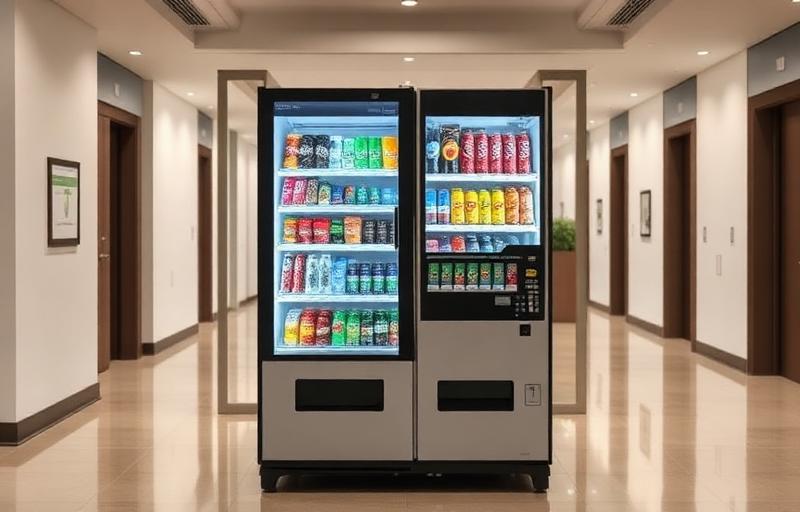
Some venue categories are structurally better than others for USA vending. After thousands of placements across American metros, a consistent top-20 list emerges — these are the venue types where strong revenue is the rule, not the exception.
1. Large manufacturing plants (200+ employees), especially in the Midwest and Sun Belt. 2. Distribution and fulfillment centers — the post-2020 logistics boom built thousands of new American sites. 3. Regional hospitals with overnight staff. 4. 24-hour fitness chains (24 Hour Fitness, EoS, flagship Planet Fitness). 5. Trade and vocational schools with on-site student populations.
6. Auto dealership service waiting rooms (captive audience, 30-60 minute average wait). 7. Self-storage office hubs with 24-hour access. 8. Truck stops and logistics yards along USA interstate corridors. 9. Large apartment complexes (300+ units) with amenity spaces. 10. Coworking spaces in tier-1 American suburbs.
Across the USA, demand concentrates in a handful of high-growth metros. Operators report the strongest unit economics in Texas, Florida, California, Georgia, Arizona, North Carolina, with standout suburban pockets like Plano, TX, Frisco, TX, The Woodlands, TX, Doral, FL, Coral Gables, FL, Alpharetta, GA consistently outperforming national averages. The geographic concentration of top-20 venue types is stark. Manufacturing and distribution placements dominate Texas, Ohio, and Tennessee. Hospital and fitness placements lead in Florida and Arizona. Auto dealership placements are strongest in suburban Georgia and North Carolina markets.
11. Municipal buildings with public-facing service (DMV, court annexes, social services). 12. Community colleges with dense weekday foot traffic. 13. EV charging stations with 30+ minute average dwell time. 14. Hotel back-of-house staff areas (massive untapped category in USA hospitality markets). 15. Car wash waiting areas in high-end suburban detail facilities.
16. Large laundromats (50+ machines) in dense USA metros. 17. Recreational sports complexes (youth soccer, baseball, hockey — heavy weekend traffic). 18. RV and boat dealership service centers. 19. Industrial supply houses and contractor depots. 20. Regional airport employee-only areas (badge-required, not public concourse).
Patterns across the list: captive audiences, predictable repeat exposure, and minimal direct food competition. The locations that consistently underperform USA averages are the inverse — open lobbies with rotating visitors, sites with adjacent cafeterias or convenience stores, and any placement where the host has multiple vending operators competing for the same foot traffic.
Operators building a route from scratch should aim for a tier mix: 40% to 60% of placements in tier-1 venues (high revenue, harder to land), 30% to 40% in tier-2 venues (steady revenue, moderate sales effort), and 10% to 20% in tier-3 fill-ins to maintain route density. Pure tier-1 portfolios look great on paper but suffer from low diversification — one lost contract is a major revenue hit.
What separates successful USA operators on this list isn't access — most of these venue types are reachable by any serious operator. It's persistence in the sales process and willingness to walk away from bad commission terms. A tier-1 placement at a 30% commission is often worse than a tier-2 placement at 0% commission once the loaded math is run.
Once you've mapped your numbers, plug them into our free ROI Calculator at /roi-calculator to pressure-test the deal. For multi-machine routes, financing scenarios, and 5-year projections, the Premium ROI tools on the same page give you the lender-ready view.