LLC vs Sole Proprietor for USA Vending Operators — What's Best?
LLC vs Sole Proprietor for USA Vending Operators — What's Best? Liability, taxes, and the specific structure American vending operators should use.
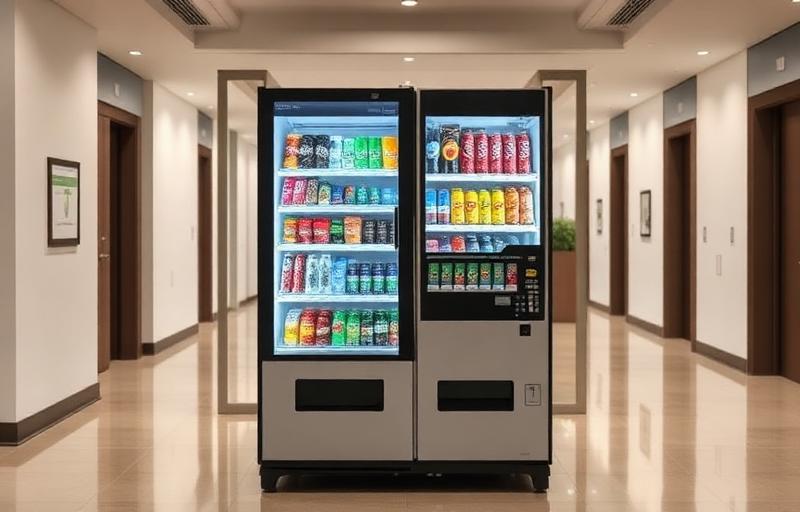
The single most common question new USA vending operators ask: do I need an LLC, or can I just operate as a sole proprietor? The honest answer for most American operators in 2026 is: form the LLC. The cost is small, the liability protection is real, and almost every serious location host now requires a Certificate of Insurance under a business name — not a personal name.
Sole proprietorship is the default. The moment you sell your first vended snack in the USA without forming an entity, you're a sole proprietor. There's no paperwork, no filing fee, and no separate tax return — vending profit flows directly onto your personal Schedule C. The catch: every business liability flows directly onto your personal assets too.
LLC formation in most American states costs $50 to $500 one-time plus $0 to $800/year in state franchise or annual report fees. Wyoming ($100), Texas ($300), and Florida ($125) are among the cheapest. California ($70 formation + $800/year franchise tax) and Massachusetts ($500 formation + $500/year) are among the most expensive.
Across the USA, demand concentrates in a handful of high-growth metros. Operators report the strongest unit economics in Texas, Florida, California, Georgia, Arizona, North Carolina, with standout suburban pockets like Plano, TX, Frisco, TX, The Woodlands, TX, Doral, FL, Coral Gables, FL, Alpharetta, GA consistently outperforming national averages. USA operators serving multiple states should form the LLC in their home state, then register as a foreign LLC in each additional state where they place machines. The 'form in Delaware/Wyoming for the tax benefits' advice usually doesn't apply to small vending operators — the foreign registration fees eat the supposed savings.
Liability is the main reason USA vending operators should use an LLC, not tax savings. A vending machine can theoretically cause: bodily injury (machine tips over), property damage (water leak from a refrigerated unit), product liability (allergic reaction to a snack), and contract disputes (commission disputes with hosts). An LLC protects your personal home, car, and savings from any of these scenarios.
From a tax perspective, a single-member LLC in the USA is taxed exactly like a sole proprietorship by default — same Schedule C, same self-employment tax. There's no tax benefit to LLC vs sole prop at the federal level until you elect S-corp taxation, which generally only makes sense once net profit exceeds $40,000 to $60,000/year (the threshold where payroll-tax savings exceed the S-corp compliance overhead).
S-corp election is a powerful tool for established USA vending operators. Once your route nets $60,000+/year, electing S-corp status (Form 2553) lets you split income between salary and distributions. The distribution portion avoids self-employment tax, which can save $4,000 to $10,000/year for an operator netting $80,000. Below the threshold, the S-corp compliance overhead (payroll, separate return, RIA-quality bookkeeping) usually exceeds the savings.
Practical structure for a typical USA vending operator in year 1: single-member LLC, taxed as a sole proprietorship (default), business bank account, separate business credit card, basic bookkeeping in Wave or QuickBooks Self-Employed. Total annual entity overhead: $50 to $800 depending on state.
Structure for a USA operator in year 3+ with 20+ machines and net profit above $60,000: single-member LLC with S-corp election, dedicated payroll provider (Gusto, $40 to $80/month), CPA-prepared annual return, retirement plan contributions through the entity (Solo 401k or SEP-IRA). Annual overhead: $2,000 to $4,000, more than offset by tax savings at that scale.
What you should not do as a USA vending operator: run revenue through your personal bank account (commingling destroys LLC liability protection), skip the EIN (free from the IRS, takes 10 minutes online, required for business banking and W-9s), or rely on cash transactions to avoid sales tax reporting (state revenue departments actively audit vending operators and the penalties are severe).
Once you've mapped your numbers, plug them into our free ROI Calculator at /roi-calculator to pressure-test the deal. For multi-machine routes, financing scenarios, and 5-year projections, the Premium ROI tools on the same page give you the lender-ready view.